
Why Lying at Work Holds You Back
Article originally posted on TrustWebTimes.com Most of us can agree that deception is harmful and destructive to relationships and professional
Published Oct 2020

Article originally posted on TrustWebTimes.com
Most of us can agree that deception is harmful and destructive to relationships and professional aspirations; But what about “white lies?” Are white lies really less damaging to our professional relationships?
“White lies,” small lies you tell others to protect their feelings, to avoid trouble, or to make yourself look good, can take many forms.
- “That outfit looks professional.”
- “The presentation looks amazing!”
- “You sounded great in that meeting.”
- “No, you don’t look like you gained weight.”
Don’t think these lies “count” or are harmful? Read on.
What is a lie exactly?
In his book Lying, neuroscientist Sam Harris describes a lie as:
- The intentional misleading of another when honest communication is expected.
Why are “white lies” bad?
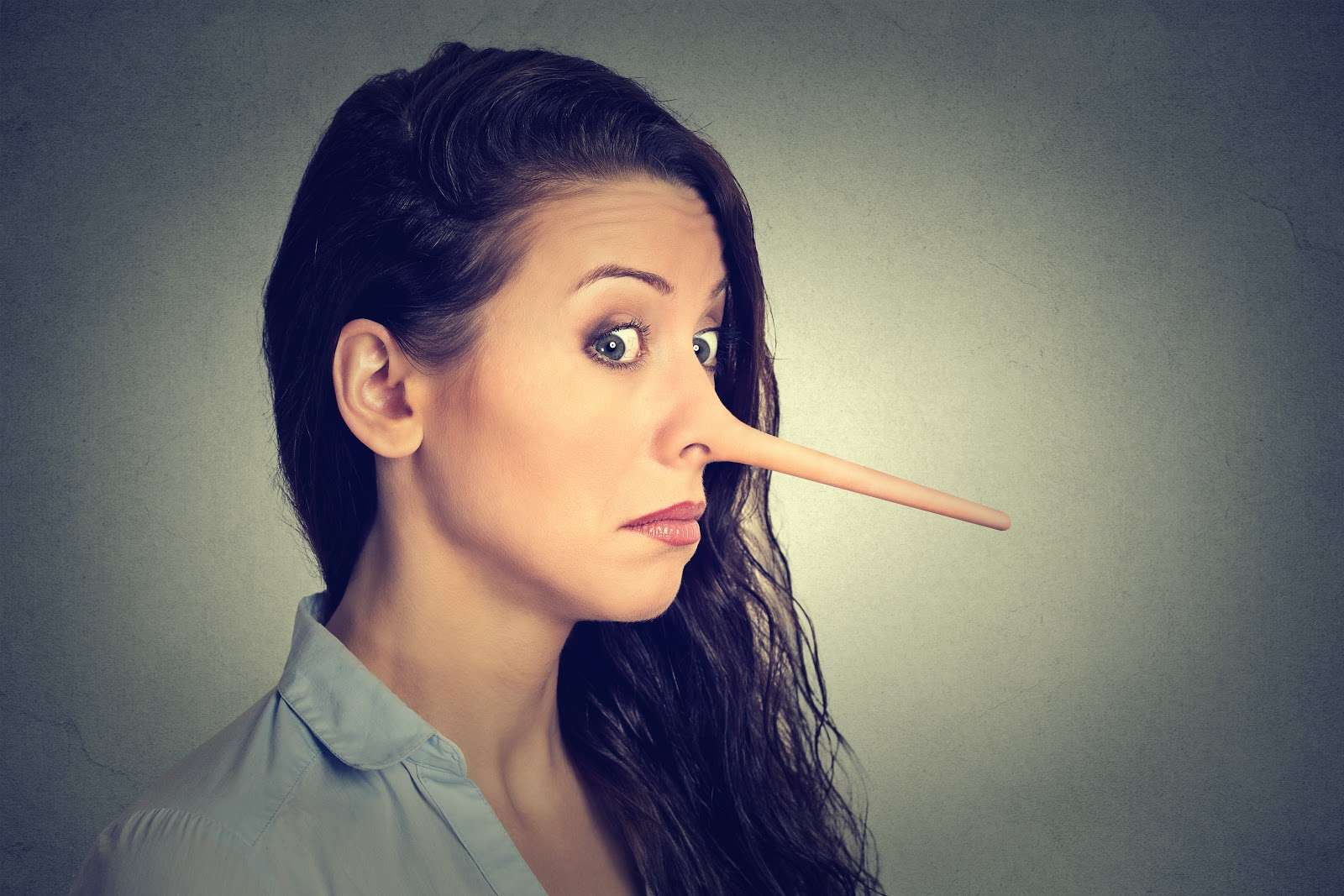
Harris considers white lies to be the most dangerous of all because although we imagine that we are telling these lies out of compassion for others, we rarely understand or anticipate their damage.
This is because by lying, we deny those around us access to the best available information, and they, in turn, are then left to come to decisions or conclusions based on incorrect evidence.
Consider a quick non-work simple example to illustrate principle:
- You tell your new partner that your Baha Men (singer of “Who Let the Dogs Out?”) is also your favorite band.
For your next birthday, your partner buys tickets to the upcoming Baha Men concert – they also spent $80 on two promotional t-shirts for you to wear. Along with being confused as to why they love Baha Men so much, and thinking deeply as to what else they sing and why they are even touring, you need to now pretend (lie) over and over. Your partner is operating on incorrect information and now you both have to pay for it. You could have stayed home and they could have brought their best friend who also loves the Baha Men.
Now imagine more serious consequences of this principle in the workplace such as the missed opportunities for professional growth and opportunities we deny others.
Does lying harm the liar?
And if that isn’t a strong enough argument against telling white lies, consider that lying hurts the liar in ways they likely don’t fully understand.
A study reported in The Atlantic makes a strong case that lying is actually bad for us. The study found that participants who were able to reduce the number of lies they told in a week had fewer mental health complaints (such as feeling tense) and fewer physical health complaints (such as headaches), than participants who did not.
Think about it. Keeping track of those “white lies” in order to remain consistent is a mentally and emotionally draining task.
Besides, it would be naive to believe that the effects of those little, “insignificant” lies would not build over time and to fail to realize that lying leads to more shallow, less fulfilling relationships. Look back at your life and consider the commonalities in relationships with people you have formed deep connections with. Now look back at your relationships that have failed. Or consider your relationships that have been long lasting but feel superficial. To what extent has honesty or deception played a role?
Lying in the workplace:
This might not seem like that big of a deal if you are pretending to like Tara or Steve from Accounting, or by telling your boss that you have everything under control. But all these white lies will eventually come back to bite you in the ass.
In the workplace, lies can harm your relationships with coworkers and your employer, and can ultimately harm the business altogether.
This includes lying to protect others, lying in front of others, lying in front of your boss to “support the team” and beyond. For example:
- Sarah has a team she leads. Nothing is as important to Sarah than protecting and supporting her team. In this noble mission to do right by her team, she lies in front of them to her bosses and others. Most recently, Sarah lied in front of David (one of her team members) to her boss to help him get a much needed promotion.
While at face value this might seem just and required, after all, Sarah supported David and David got his promotion, and everyone is happy. Most importantly you might think: no one got hurt.
However, after the high of getting a new promotion settles, David might think, “Can I personally trust everything Sarah says?” What if David’s promotion meant working with Sarah as equals? David might always think to himself that you can never really trust what Sarah says, after all, she will do anything to protect her team and David is no longer part of that team.
The same erosion of trust and relationship could happen if Sarah lied in front of her boss, Eckhart, to “protect the company.” Eckhart may never fully trust Sarah while employed at the company and will surely not trust her when she leaves the company (to protect confidential information and so on). This can mean that Sarah is passed over for promotions and perhaps is given a bad job reference, with her boss sharing,
“Sarah is fantastic at her job, cares for her team, but…be careful…”
That being said, here are three major reasons to be truthful:
- The Truth is a Gift: One of my favorite reasons for choosing truth over deception is that the truth is a gift you give to others and to your relationships. Telling the truth always means your words and thoughts always have the weight you want them to have and should have.
This concept is also covered in Harris’s book, Lying.
- Lying is Destructive: A major reason to avoid lying is that it can destroy the trust that you may have with other people. White lies can grow into even bigger lies and telling white lies can become habit-forming. Also, if you’re lying, you may even start to think everyone else is lying. This is no way to live.
- Lying is Exhausting: If the moral and/or relationship reasons didn’t catch your attention, consider this: Lying is a heck of a lot of work and you need to keep track of the lies then worry about them. Do you really have the extra time and energy for that?
Scenarios:

Many times it’s hard to think about and see the impact your lies have on people, even when you think they’re harmless or only create to “protect” someone:
- Lying to Salespeople: Instead of pretending to love a product or service or that you will buy something, tell them the truth to set them free to not bother you and for them to explore better prospects.
- Lying about a Mistake you Made: Instead of trying to hide it and creating countless more issues and needless worry, tell the truth and join your team in working to fix the issue.
- Lying to Vendors and Partners: Instead of not letting them know you’re upset and cancelling their contract, tell the truth and give them a chance to win back your business or look for other clients, so they don’t take a major hit on their business.
In practice:

It may be a gut reaction to lie, you’ve done it all your life, but when people know you are telling the truth, they are more likely to trust you.
Some points to consider on the road to truthfulness:
- Practice Makes Perfect: Telling the truth is a muscle you can build. You can always correct yourself afterwards if you do make a mistake and catch yourself in a lie. Also try eliminating the words “honestly” and “truthfully” when starting or finishing a sentence, as it begs the question, “were you not telling the truth before?”
- Wait to Speak: You don’t always have to speak in every situation or after you are asked something. You can’t wait to answer or ask for more time to collect your thoughts.
You might also think your truth at this moment is not worth sharing and that’s ok.
- Committing to Being Truthful is not a License to be a Jerk: We’ve all heard people say, “I’m not a bullshiter, I tell it how it is, no matter what.” Those people are assholes. Making the decision to be truthful is not a license to be unkind or insensitive. Think, am I being both truthful and tactful?
In conclusion, this is in no way a thorough exploration as to why lying is harmful and how speaking the truth is a winning strategy. Read Sam Harris’ book Lying.
Thoughts?